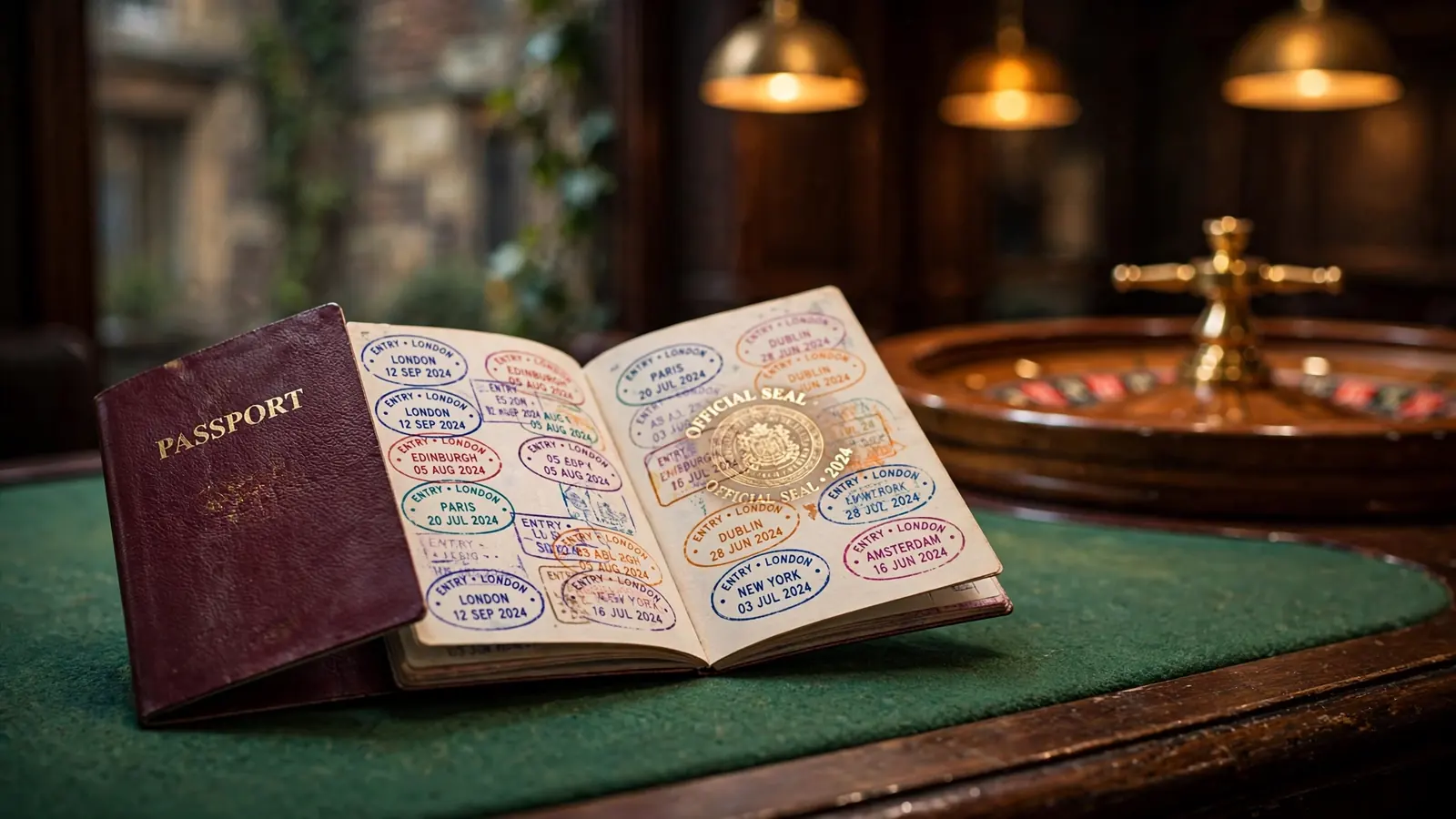
Most Trustworthy Online Casinos in the UK: How to Check
Trustworthiness depends on verifiable operator details, clear protections and understandable terms—not polished design or marketing claims.
 Available in GB

Table of Contents
- What “trustworthy” should mean before real money is involved
- The UK licence check that matters
- Real-money play: check the withdrawal route as well as the deposit
- So what makes an online casino trustworthy?
- Top online casinos in the UK
- A “best” casino claim is only useful if you can verify it
- Read casino reviews with the evidence in front of you
- How I’d check a casino before opening an account
- “Non-GAMSTOP” is not a shortcut around the rules
- Bitcoin casinos: check the licence, not the label
- Ethereum casinos need the same checks
What “trustworthy” should mean before real money is involved
I used to treat a tidy homepage and a familiar-looking padlock as reassuring signs. They aren’t much of a test. A site can look polished, call itself “trusted” and still leave you with unanswered questions about who runs it, what protections apply, or where to turn if something goes wrong. Before I put money in, I want evidence I can check and terms I can understand.
A trustworthy casino site should make it possible to identify the business behind the brand and find meaningful information about the protections it offers. Marketing language is not evidence. Neither is a confident badge with no clear explanation of what it represents.
The first thing I care about is whether the operator’s status can be checked independently. A brand name and a company name are not always the same thing, so I look for a clear connection between the site, the operator and the relevant regulatory record. The UK Gambling Commission’s public register is one place where that connection can be visible. For instance, a register entry has linked 333casino.com with Grace Media (Gibraltar) Limited, identified the operator by account number 57869 and described the domain as a White Label. That kind of detail is more useful than a site simply saying it is “licensed”. It gives you something concrete to compare.
A register entry is not a guarantee that an operator will never make a mistake. Oversight matters partly because it can involve consequences when rules are broken. The Commission announced a £60,000 penalty for Grace Media on 26 June 2025, following breaches concerning self-exclusion and consent for direct electronic marketing. I wouldn’t take that as proof that every aspect of a site is unsafe, nor would I brush it off because the operator has a licence. It is a reminder to look at what the regulator’s records actually say, rather than treating a licence as a magic word.
Offshore casinos for UK players: rules and risks
The protections themselves matter too. I want to know whether I can set account limits, change them, and find self-exclusion without digging through a maze of menus. I also want to see how to complain and what route exists if the operator’s own response does not resolve the issue. UKGC licensees must provide an internal complaints process and access to an approved Alternative Dispute Resolution service. That is a practical safeguard, not a promise that a complaint will go my way. Still, knowing where to take a problem is better than discovering there is no clear route after it happens.
The account rules should be understandable before you commit. Operators must check age before allowing a customer to deposit, and new customers must be prompted to set a financial limit before their first deposit. The controls for managing account limits should remain accessible. These details can sound dull beside a banner promising “VIP treatment”. They are more relevant to your experience. If the important settings are hard to find, that tells me something about the care taken with the customer journey.
Promotions deserve the same scepticism. A “personalised” offer may still come with conditions, and a site should let customers control which kinds of promotions they receive and which channels can be used to send them. I read the actual terms before deciding whether an offer is worth my attention. I’ve learned not to count a headline bonus as money in my pocket. It is an offer with rules attached, and those rules need to be clear enough to assess.
I also look for ordinary signs of accountability: named terms, accessible support information, and explanations that do not change meaning halfway through. A site can have attractive games and a smooth account screen while still being vague about important conditions. When the wording is slippery, I slow down. “Simple” should mean that I can understand what I am agreeing to, not that the operator has left out the awkward parts.
No single clue settles the question. A regulator’s record, clear protections and readable terms each tell you something different; together, they give you a better basis for deciding whether to continue. That is a more useful standard than asking which online casinos sound most trustworthy. I would rather see what can be checked than borrow confidence from a slogan.
Do
- Check the operator’s status independently via the UKGC public register
- Look for clear routes to set account limits and self-exclusion
- Read the actual terms of promotions before accepting them
Don’t
- Rely on a polished homepage or a padlock icon as proof of trust
- Treat marketing language or unexplained badges as evidence
- Assume a licence is a guarantee that an operator never makes mistakes
And if the evidence is hard to find, I don’t fill the gap with optimism. I leave the money where it is.
The UK licence check that matters
When I first started looking at online casinos, I treated the country name in a site’s footer as if it settled the question. It does not. A business can be based overseas and still offer gambling to people in Great Britain; what matters for this market is whether it holds the relevant UKGC Licence.
That is the basic test. Remote gambling businesses that provide facilities to customers in Great Britain need a licence from the UK Gambling Commission, wherever the business itself is based. So an overseas address is not, by itself, proof that an operator is outside the British rules. Nor does a Union Jack, a British-sounding brand or a UK-facing website prove that the operator has met them.
The distinction is easy to miss because location and permission are different things. A casino may be run from another country, but if it offers real-money gambling to customers in England, Scotland or Wales, it must hold the appropriate UKGC Licence. The operator’s own location does not replace that requirement. It also does not tell you whether the business is authorised to serve people here.
I used to skim the bottom of a page, spot a company address and move on. That was a weak check. A postal address can tell you where a business says it is based; it cannot establish that the business has permission to provide remote gambling in Great Britain. The same goes for statements such as “internationally licensed” or “regulated” if they do not establish the relevant British licence. Reassuring wording is not the test.
No Account Casinos in the UK: How They Work
The scope matters too. The requirement described here applies to operators offering remote gambling to customers in Great Britain: England, Scotland and Wales. It is not a rule that can simply be extended to every part of the United Kingdom without considering the different legal arrangements. Northern Ireland has a distinct regulatory position. If a site serves people in Great Britain, though, its overseas base does not remove the UKGC requirement.
There is a practical reason to keep this check separate from impressions about a site. Design, customer service and a polished sign-up journey may make an operation feel established, but none answers the licensing question. A trustworthy online casino is not established by the country shown in its branding. For a British customer, the relevant question is whether the operator has the permission required for the market it is serving.
That does not mean the words “licensed” or “regulated” should be accepted on trust. They are claims, and the operator may present them in a way that sounds more specific than it is. I now try to translate the claim into a plain question: does this business hold a UKGC Licence to provide the gambling service it is offering to customers in Great Britain? If the answer is unclear, the claim has not done the job.
A common mental shortcut is to assume that a casino based outside Britain must be an offshore operation, and therefore has no British obligations. The rule cuts across that assumption: the location of the business does not decide whether a licence is needed when it offers remote gambling facilities to people in Great Britain. The reverse shortcut is no better. A site that uses British imagery or speaks directly to British customers has not demonstrated compliance merely by looking local.
Attention: A British-sounding brand, Union Jack imagery, or a UK-facing website does not prove that an operator has met regulatory requirements or holds a UKGC Licence.
I think of the licence check as a threshold, not a medal. Passing it tells you that the operator is authorised under the relevant British regime; it does not make every part of the experience flawless or mean you should stop asking sensible questions. But without that threshold being met, a confident slogan about being a safe or trusted casino is just a slogan. That is where I used to get caught: I read the sales language first and treated the essential test as fine print.
Keep the question narrow. Is the operator serving customers in England, Scotland or Wales, and does it hold the UKGC Licence required to do so? The answer is not supplied by the company’s headquarters, a familiar logo or the way the site describes itself. It is a matter of the operator’s regulatory status in the market. Start there. Everything else is secondary.
Real-money play: check the withdrawal route as well as the deposit
A deposit button tells you how money can go in. It does not tell you how it comes back out, or how long that part takes. I used to treat the cashier page as a minor detail and focus on the games. That was backwards. Before putting money in, check the withdrawal options, any fees, the operator’s processing steps and whether the method you prefer is available for both directions. Deposit and withdrawal availability are separate.
Merkur Casino Online UK: Games, Rules and Checks
The first withdrawal can take longer than later ones because the operator may need to check your identity or payment ownership. A specialist review reports an extra 12–24 hours for document checks on first-time withdrawals. Treat that as a reported example, not a promise or a standard timetable: the site’s own terms and the circumstances of your account matter. If you are asked for documents, follow the instructions carefully and check that the images are clear. Sorting out a missing or unreadable document can add another hold-up.
The payment method can also change the wait. One specialist review reports PayPal withdrawals clearing in roughly 4–6 hours on weekdays, with the reported window extending to 8–10 hours from Friday to Sunday. For debit cards, the same kind of review gives 2–3 banking days after the operator has reviewed the request. Those are not guaranteed delivery times. The operator’s processing queue, the day you request payment and the payment provider’s own handling can all affect when funds arrive.
Bank transfers deserve a look at the fee line as well as the estimated arrival time. A specialist review reports that charges of £2–£5 may apply, depending on your bank’s policy. Check whether the casino itself charges anything, whether your bank may apply a separate fee, and whether the displayed amount is the amount you will receive. Small print matters here.
I’d also read the cashier information before depositing rather than assuming that a method shown beside the deposit button works for withdrawals too. Check minimum and maximum transaction rules, any stated processing window, and what happens if a payment method cannot receive a payout. If the explanation is vague, ask customer support a direct question and keep the reply. “Fast withdrawals” is marketing until you can see what the operator means by fast.
Payment processing times vary: PayPal withdrawals may clear in 4–10 hours, while debit cards can take 2–3 banking days after the operator’s review.
Card payments have an important UK restriction: UK-licensed casinos cannot accept credit cards for gambling. Do not treat a credit-card route through a payment wallet or intermediary as a workaround; credit-card-funded gambling payments are also prohibited. Check the funding source, not just the logo in the cashier.
The useful comparison is not simply which casino accepts the most deposit methods. It is whether the route out is clear, what checks may pause it, and what costs could be taken along the way. I learned to read that before pressing deposit. Much less guesswork.
So what makes an online casino trustworthy?
For me, “trustworthy” is not a design style. A site can look polished, use reassuring language and still leave you with no clear way to check who is responsible for it. I’ve learned to treat confidence as something a company has to earn with evidence, not something its homepage can announce.
The plain-English test is whether the operator can be held to account in the market where it offers gambling. In Great Britain, the Gambling Commission regulates remote gambling offered to consumers. That oversight matters because it gives you something external to the casino’s own claims: a regulator responsible for the activity.
Casino Without a UK Licence: Rules and Risks
But a regulator’s name dropped into a footer is not proof by itself. Trust depends on whether the claim can be checked and whether the operator’s identity is clear. If the company behind the site is hard to pin down, or the information on the site does not line up with what an independent record shows, I would not treat a confident badge as reassurance. Marketing is easy. Accountability is the part that counts.
I also look for plain language where the customer has to make a decision. What are the terms? What happens when you want to stop, raise a concern or ask the operator to explain a decision? A trustworthy business should not make important conditions feel like a puzzle you only discover after signing up. If the wording is vague, or a claim sounds bigger than the explanation beneath it, slow down.
That does not mean every inconvenience proves a site is dishonest. It means you should be able to tell the difference between a normal process and an unexplained one. Clear policies give you a basis for judging what the operator says; vague promises ask you to take its word for it. I have done that before. Not clever.
Trust Evidence
Trust is a judgement made from verifiable evidence and identifiable oversight, not from a slogan or a design style.
“Safe” and “trusted” are often used as if they were measurable qualities. On their own, they are just labels. The useful question is what sits behind them: identifiable oversight, information you can verify, and terms that let you understand the arrangement before you commit. A good-looking site may be pleasant to use, but appearance cannot answer those questions.
So, what is the most trustworthy online casino? There is no honest answer based only on a slogan or a ranking. Trust is a judgement you make from evidence about the particular operator, not a permanent award that a site can give itself. The same goes for asking which casino is most trustworthy online: the answer should follow from checks you can repeat, not from someone else’s certainty.
I would not call any operator trustworthy simply because it is familiar, popular or praised in a review. Those things might prompt a closer look, but they do not replace one. My standard is less exciting: can I identify who is accountable, confirm the oversight that applies, and understand the terms without guessing? If not, I stop there. No badge changes that.
Top online casinos in the UK
- SpinFormulaBonus: 550% Up To £15,000 + 550 FS · Payout speed: 1-3 business days
- EvoSpinBonus: 125% up to €2500 + 125 Free Spins · Payout speed: 1-3 business days
- BritsinoBonus: Welcome Package – Get your £2,200 + 2,000 FS · Payout speed: 1-3 business days
- SlotoSportBonus: 500% up to £ 10 200+ 777 FS · Payout speed: 1-3 business days
- DieselwinBonus: Welcome Pack 250% up to £4000 + 200 FS · Payout speed: 1-3 business days
- NightLuckBonus: Welcome Pack + 805% Up To 6400€ + 280 FS · Payout speed: 1-3 business days
A “best” casino claim is only useful if you can verify it
I’m wary of any page that declares one casino the “best” without showing what that means. Best for whom? A polished design or a generous-sounding offer does not tell you whether the operator is authorised to serve customers in Great Britain. I have mistaken confidence for evidence before. It is an easy mistake to make.
Rather than treating a ranking as a verdict, use it as a prompt to check the operator yourself. The UK Gambling Commission’s public register is more useful than a badge or a sentence on a casino’s homepage: it lets you look for the company and the domain it uses for UK customers. Check that the details match the site you are actually visiting. A similar brand name is not the same thing as a confirmed match.
UK Online Casino Payouts: RTP and What It Means
The register gives a concrete illustration. It lists LeoVegas Gaming PLC under operator account number 39198, and its domain register identifies leovegas.co.uk as the active UK-facing domain for that account. That is a checkable link between an operator entry and a domain, not a claim that the brand is the right choice for every player. Register information can change, so check it yourself rather than relying on a copied statement.
When a page calls a casino the “best”, look for the evidence behind the label. Does it name the licensed company? Does it point to a UKGC Register entry? Can you match the domain you have open to the domain shown in the regulator’s records? If it offers only praise, a logo, or a bold rating, you still have a claim—not proof.
I would not turn this into a list of winners. A ranking can hide the difference between a reviewer’s preference and a fact you can independently confirm. The useful question is narrower: can you verify that the operator and the UK-facing site correspond to the regulator’s record?
That check will not tell you whether you will enjoy the games or whether the terms suit you. It does give you a solid starting point before you decide whether to go further. Less hype. More checking.
Read casino reviews with the evidence in front of you
A casino review can be useful, but I don’t treat confident wording as proof. “Trusted” may mean the reviewer checked public records; it may also be a label beside a sign-up link. I look for the evidence behind the claim and whether the page distinguishes what it verified from what it simply repeats.
Offshore Casino Sites for UK Players: What to Know
Start with the review’s sources. If it says an operator is licensed, does it point to the UK Gambling Commission’s public register? If it describes a policy or a restriction, can you find that detail in the operator’s own terms or the regulator’s records? A link is not enough by itself: check that it leads to the relevant entry or document, not just a general page.
Enforcement records matter too. They show that oversight is more than a badge, and can add context a promotional review may leave out. For instance, in June 2025 the Commission fined Grace Media £60,000 after finding breaches connected with self-exclusion and consent for direct electronic marketing. That does not, on its own, tell you everything about every service associated with the company. It does give you a specific regulatory record to weigh against broad claims that everything is “safe” or “problem-free”.
I also notice what a review does not explain. Does it say how it checked a claim, or when? Does it separate the reviewer’s own observations from information supplied by the operator? Are drawbacks discussed with the same care as benefits? A page that offers only praise and makes every feature sound effortless has given me little to assess.
Affiliate links do not automatically make a review false, but they are a reason to read with your eyes open. The practical test is whether the writer provides independently checkable details, acknowledges limits and corrects information when it changes. If a claim cannot be followed back to a record or clear terms, I treat it as unverified rather than quietly upgrading it to fact.
Keep the review as a starting point, not your evidence. Open the primary record it cites, compare the wording, and check the date. That takes a little longer than trusting a star rating. Worth it.
UK phone-credit casinos: deposits, fees and limits
How I’d check a casino before opening an account
I don’t start with the homepage banner. I look for the legal operator’s name and the details that let me check who is actually running the casino. A familiar logo or a polished site is not enough; the company name should be clear in the terms and conditions, not buried behind vague wording.
Next, I check the UKGC Licence on the Gambling Commission’s public register. I search for the operator and make sure the entry matches the casino I’m considering, rather than relying on a badge on the site. If the register lists a domain, I compare it with the address in my browser. A mismatch is a reason to stop and work out what I’m looking at. Don’t rush it.
Before I create an account, I read the sections on verification, payments and complaints. I want to know what information the operator may ask me for, how to contact support and where its complaints process is explained. UKGC licensees must also provide access to an approved Alternative Dispute Resolution service, so I check that this is described clearly rather than treated as an afterthought.
Then I pay attention to the account-opening steps. Under UK rules, age and identity checks must be completed before you can deposit or play. That means a request for documents is not automatically suspicious; it is part of the process. I’d rather know what is expected before handing over personal details than be surprised later.
Be ready to provide a photo of your passport or driving licence, along with a recent utility bill as proof of address. Make sure the details are readable and match the information you entered. If the operator asks for something else, use its official support channel to clarify why and how to submit it securely. Don’t send identity documents to an address you found in an unsolicited message.
Checking a Casino
Identify the operator
Find the legal company name in the terms and conditions rather than relying on the brand logo.
Verify the licence
Search for the operator on the UK Gambling Commission’s public register and match the domain to the record.
Review protections
Check the site for clear instructions on verification, payments, and the approved Alternative Dispute Resolution service.
The timing can differ between operators. LeoVegas, for instance, may request photo identification and proof of address dated within the previous three months, commonly at the first withdrawal. That is a specific operator’s stated approach, not a rule you should assume applies everywhere. Check the casino’s own current instructions before you register.
I also pause if the site’s terms, operator identity or document instructions contradict one another. A trustworthy-looking design cannot resolve that. If I can’t establish who is responsible for the account or what will happen to my documents, I leave it there. No account is worth guessing.
“Non-GAMSTOP” is not a shortcut around the rules
I understand why the phrase catches the eye. If you have chosen to self-exclude, though, a casino advertising a way around that decision is not offering a harmless convenience. And if you are in Great Britain, “non-GAMSTOP” does not create an exception to the rules for remote gambling operators.
Trusted casinos not on GamStop UK: what to know
GAMSTOP is the national self-exclusion scheme used in Great Britain. The UK Gambling Commission requires online operators within its regime to participate; that requirement became compulsory on 31 March 2020. So a real-money casino serving customers in England, Scotland or Wales cannot make non-participation sound like a legitimate alternative to its regulatory obligations.
That does not mean the label itself proves everything about a site. Marketing can be loose, and a claim on a homepage is not the same as a regulator’s record. I would treat “play without GAMSTOP” as a reason to pause, not as evidence that a casino is more trustworthy or that its rules are more relaxed in a way that benefits you. A neat slogan is still just a slogan.
There is a geographical distinction worth keeping straight. The Gambling Commission’s authority under the Gambling Act 2005 covers Great Britain; Northern Ireland is not within its remit for remote-gambling provision in the same way. Northern Ireland has a different legal framework. That boundary does not turn a site outside the UKGC system into a UKGC-regulated casino, and it should not be read as advice to look for one.
If you have enrolled in GAMSTOP, trying to find a site that will take your play despite that choice can undermine the break you set for yourself. I have seen how easy it is to frame a boundary as an inconvenience when you want to gamble. That framing can cost you. Step back.
For anyone checking a casino’s claims, separate two questions: does the operator hold the appropriate UKGC licence for serving Great Britain, and does it participate in GAMSTOP as required within that regime? The answers should not depend on a badge or a promise on the casino’s own page. If a site presents exclusion as something it helps customers evade, I would not mistake that pitch for a sign of trust.
Bitcoin casinos: check the licence, not the label
Bitcoin can change how a payment is made; it does not tell you whether the casino is trustworthy. I used to treat a new payment option as a sign that a site had something more to offer. It isn’t evidence of oversight, fair treatment or a reliable operator. It is just a payment label.
An overseas address, Bitcoin branding, or a cryptocurrency-only cashier does not replace the requirement for a UKGC licence to provide gambling services in Great Britain.
The question that matters for someone in Great Britain is whether the business has the relevant UK Gambling Commission licence to offer remote gambling here. That requirement applies even when the company is based somewhere else. A site’s foreign address, Bitcoin branding or cryptocurrency-only cashier does not replace it.
That distinction is easy to lose when a page is built around “Bitcoin casino” language. The design may make the currency feel like the main point, while the operator behind the site stays out of view. I’d separate those things: first identify who runs the casino, then establish whether it is licensed for the market it serves. If that basic answer is unclear, I would not treat a Bitcoin option as reassurance.
Nor does using Bitcoin make an unlicensed site a safer choice. Cryptocurrency describes the payment method, not the protections or regulatory status attached to the gambling service. A polished interface and confident promises are still just claims until they can be checked.
I’d also avoid assuming that a casino accepts Bitcoin simply because it uses the word in a headline, or that a Bitcoin deposit tells you how any later payment will work. Payment arrangements can be presented selectively, and the label alone does not settle the practical details. Read what the operator says about the service rather than filling in the gaps yourself.
No magic currency. The same basic test remains: is the operator properly licensed to serve customers in Great Britain? If the answer is buried beneath cryptocurrency promotions, that is a reason to slow down, not a reason to trust the site more. Bitcoin may be the feature that caught your eye, but it should not be the thing that decides whether you hand over money.
Ethereum casinos need the same checks
Ethereum can be a payment option, but it does not tell you whether a casino is trustworthy. I treat the coin and the operator as two separate things: one is how money may move; the other is the business responsible for taking your bets and paying any winnings. A polished crypto page does not answer the second question.
For customers in England, Scotland and Wales, an operator offering real-money gambling must hold a licence from the UK Gambling Commission. That requirement applies whether the site is built around Ethereum, another payment method or a mix of options. A business does not become suitable for the British market simply by accepting a cryptocurrency or describing itself as international.
I used to give payment features too much weight. They looked technical, and technical can sound reassuring. It isn’t evidence of oversight. Nor does an Ethereum logo on a payment page establish who runs the casino or whether that operator is licensed to serve customers here. Keep those questions separate.
If you are considering an Ethereum casino, start with the company behind the site, not the coin. Check whether the operator holds the relevant UKGC Licence for real-money gambling in Great Britain. Make sure the licence record relates to the business you are actually dealing with, rather than relying on a badge, a promotional claim or a crypto community’s recommendation. If you cannot establish the operator’s status, pause before sending funds.
There is another practical point: the presence of Ethereum does not, by itself, tell you what protections or account processes apply. Read the site’s terms and check what it says about deposits, withdrawals and any identity or payment-ownership questions. Those details can affect your experience, but they do not replace the licensing check. A payment route and the operator’s regulatory status are different parts of the decision.
I would not call a site trustworthy just because it accepts Ethereum, nor assume that using a digital currency makes gambling safer. The useful test is still whether the operator is properly licensed for the market it serves. If the answer is unclear, the payment label is not a reason to carry on. A coin is not a credential.
How can I check whether a casino is legal?
Check the UK Gambling Commission’s public register to confirm that the operator and its domain are covered by a relevant licence. This applies to casinos offering real-money gambling in Great Britain; the UKGC does not regulate remote-gambling provision in Northern Ireland in the same way.
What is the context of GAMSTOP and self-exclusion?
GAMSTOP is part of the Great Britain online gambling regime: UKGC-regulated operators have been required to participate since 31 March 2020. Self-exclusion is an important protection, and you should be able to find it through your account controls.
What are the deposit limits and safer betting tools?
Before your first deposit, you must be prompted to set a financial limit, and controls for managing account limits should remain accessible. You can reduce a limit immediately; increases have a cooling-off delay.
Is LeoVegas UK licensed?
Yes. The Gambling Commission lists LeoVegas Gaming PLC under operator account number 39198, and its register identifies leovegas.co.uk as the active UK-facing domain.
What is the fastest withdrawal method?
PayPal is the quickest method listed: withdrawals take roughly 4–6 hours on weekdays and 8–10 hours from Friday to Sunday.